The 1v4 match structure
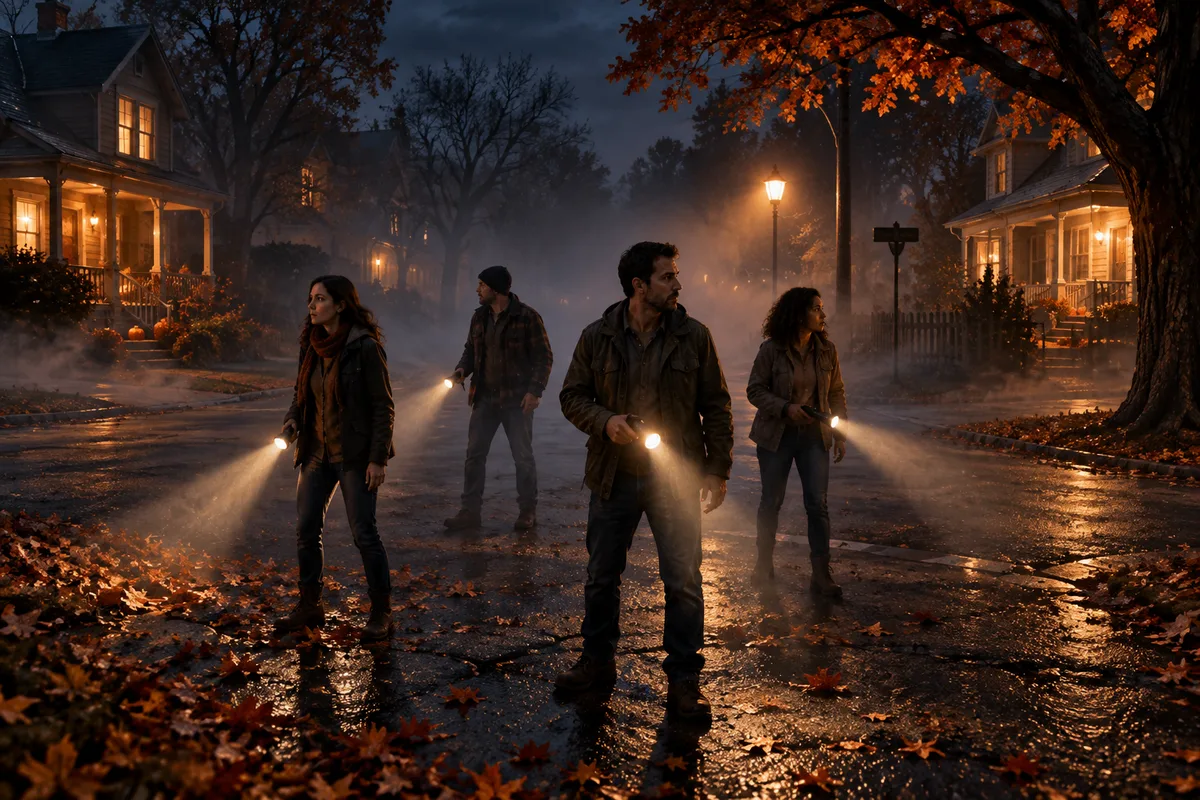
Every multiplayer match puts one player behind the mask and four players in the shoes of Haddonfield residents. IllFonic built the mode around two competing objectives rather than a single chase loop: Michael hunts, and the civilian side warns, rescues and escapes. That split is why matches swing between long quiet stretches and sudden bursts of panic.
The setting is 1978 Haddonfield, and the launch build ships with four multiplayer maps — Haddonfield Town Center, Haddonfield Heights, Orange Grove Estates and East Haddonfield. Each is a residential sandbox of houses, yards and streets rather than a corridor arena, so map knowledge matters as much as reflexes.
The game runs on Unreal Engine 5 and supports 2–5 players online with cross-platform multiplayer, so a full lobby of five can be spread across PS5, Xbox Series X|S and PC.
What Michael Myers is trying to do
Michael's primary objective is to eliminate all four residents before they escape Haddonfield. On top of that, specific Special Targets are assigned during the match, and killing them before their timers expire pays out bonus rewards.
His kit is built for pressure rather than speed. Killer Sense drops into a first-person view to detect nearby residents and pick out prey; Stalk builds by focusing on a resident, letting you track them and unlock stronger executions; Shape Jump moves him through shadows unseen and faster; Shape Dash lunges forward to close distance; Darkness Control shuts off lights, cuts power and triggers blackouts that open up Shape Jump approaches. Melee combat handles civilians who arm themselves and fight back.
The recommended play pattern is patient: build stalk before committing, approach through darkness, keep civilians separated so they cannot cooperate, and listen for the noise escape attempts generate. The two biggest mistakes are attacking the moment you see someone, which broadcasts your position, and letting all four players group up to loot and revive each other.
What the four civilians are trying to do
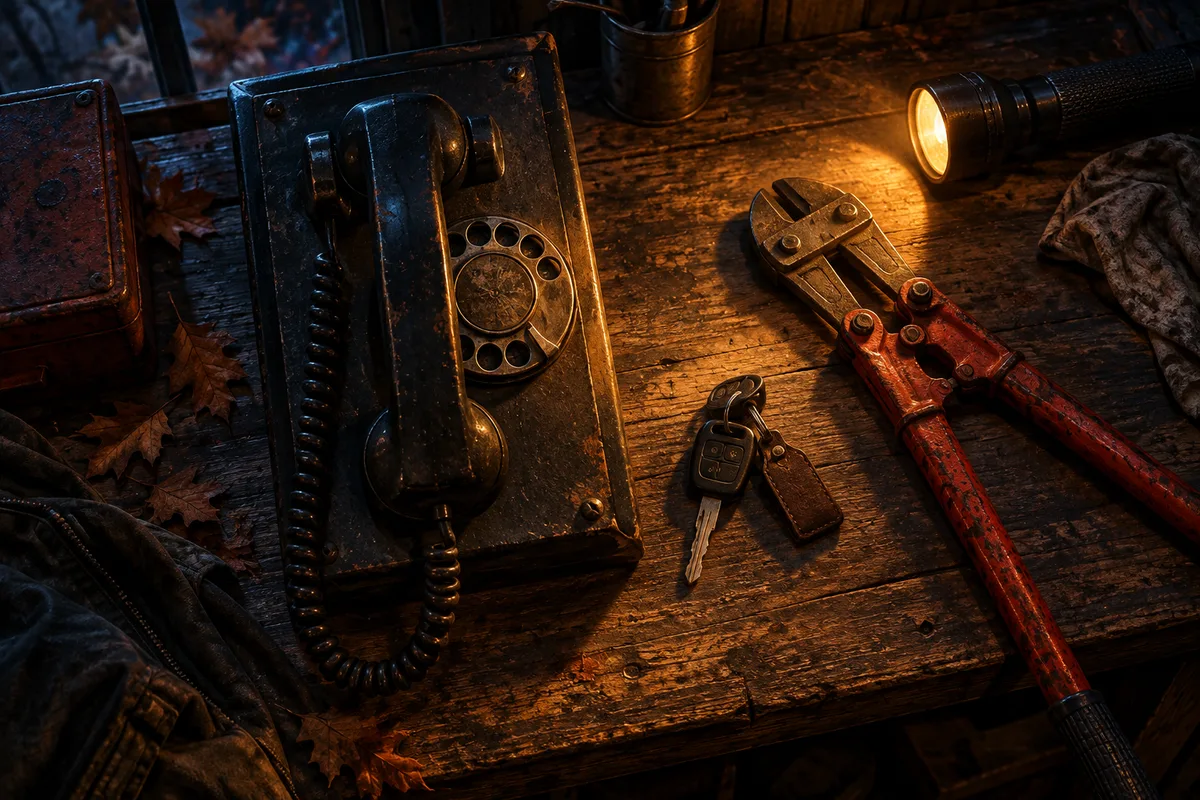
The civilian loop is loot, call, escape. Players scavenge houses for tools, complete police calls from wall phones scattered through the map, and escalate the law-enforcement response until the map-wide announcement "POLICE WAGON ARRIVED" fires. From there the team boards the wagon, or survives until the night ends.
Items decide most encounters. Pocket knives break free from a grab and are consumed on use. Shotguns and revolvers knock Michael down for a short window. Bolt cutters open Private Property gates faster than installing fuses. Keys and lockpicks matter for locked doors, and Marcus Navarro can open them without a key at all.
Named NPC residents hide in the houses and form the rescue layer of the mode. When a Special Target dies, the whole map is told — for example "SPECIAL TARGET LYNDA KILLED" — which simultaneously leaks Michael's position and tells the team a rescue objective just failed.
- Storm cellar exit — requires bolt cutters.
- Repaired car exit — requires keys and parts.
- Police wagon — arrives after enough completed police calls.
Teamwork, stats and perks
Four players cannot do everything at once, so roles emerge naturally: someone loots, someone works the phones, someone handles resident rescues. Defensive perks such as Guardian Shadow improve protection for followers, while information perks help the team find resources and read where Michael is operating.
Every playable civilian shares four stats — Athleticism for movement speed, Personality for persuasion and fear resistance, Resourcefulness for repairs and vehicles, Capability for melee and throwables — with different values and a signature trait per character. Perks such as Iron Ankles and consumables like beer and joints modify status effects on top of that.
Perk Points earned in matches roll randomized Perk Cards of varying rarities, which are then assembled into Perk Decks and equipped as loadouts. This is the layer most reviewers said the game explains poorly, so expect to learn it by playing rather than through tutorials.
The single-player campaign
The game is not multiplayer-only. It ships with a standalone story mode called The Night He Came Home, played from Michael's perspective, which also doubles as a teaching tool for the mechanics used in multiplayer.
The campaign runs six chapters, each with optional objectives that reward cosmetics through the Singleplayer challenge track. IllFonic chief creative officer Jared Gerritzen said the campaign covers events from the original 1978 film plus additional story material set around that night.
Progression is shared in the sense that both single-player and multiplayer feed the same customization economy: leveling in either unlocks additional weapons, perks and cosmetic options.
How progression works between matches
Four separate tracks run in parallel. Profile Level collects XP from everything you do, Killer Level advances by playing Michael, Civilian Level is tracked per character, and Weapon Level rises with the specific weapon Michael uses. Maxing any of the four unlocks Prestige for further rewards.
Challenges come in three flavours: Passive challenges tracked automatically across both roles, Progressive challenges tied to specific characters, skins and weapons that complete in sequence, and the Singleplayer challenges attached to the six campaign chapters.
Michael customizes killer skins, tints and starting weapons, and picks three abilities from a pool that includes Reality Tear, Blackout and Detection Pulse — meaning two Michael players can approach the same map very differently.
Reading a Haddonfield map
The four launch maps — Haddonfield Town Center, Haddonfield Heights, Orange Grove Estates and East Haddonfield — are residential sandboxes rather than looping arenas. Houses can be entered, cut through and used to break line of sight, which changes how both roles think about distance.
For civilians, the three things worth memorising on each map are wall phone locations, Private Property gates that need bolt cutters or a fuse, and where the storm cellar and car exits sit relative to each other. Knowing two escape options at all times is what stops a bad rotation from becoming a death.
For Michael, the same geography reads differently: interior chokepoints, light switches and power boxes are the tools that turn a large open neighbourhood into a series of small traps.
The mistakes that lose matches
The most common civilian error is treating the game like a fast chase title. Sprinting everywhere generates noise, and escape attempts specifically create noise that reveals positions to Michael — patience is a mechanic here, not a personality trait.
The second is hoarding. A pocket knife left unused in an inventory saves nobody, and one player carrying every useful item means the team loses everything when that player dies.
On the Michael side, the equivalent mistake is committing to a kill you cannot finish. Attacking on sight broadcasts your position, and a failed grab against a knife hands the civilian team both information and a free rotation.
What to do in your first session
Start with the single-player campaign. The Night He Came Home teaches the mechanics used in multiplayer, and doing it first means learning Killer Sense, Stalk and Darkness Control without four humans punishing your mistakes.
Then play a few matches as a civilian rather than queuing for Michael. The civilian role exposes you to loot routes, phone locations and escape points, which is exactly the map knowledge you need later when you play the killer.
Finally, read the perk system before you invest points. Perk Points roll Perk Cards of different rarities that build into Perk Decks, and this is the layer the game explains least well — going in blind is the main reason new players feel their progression is doing nothing.